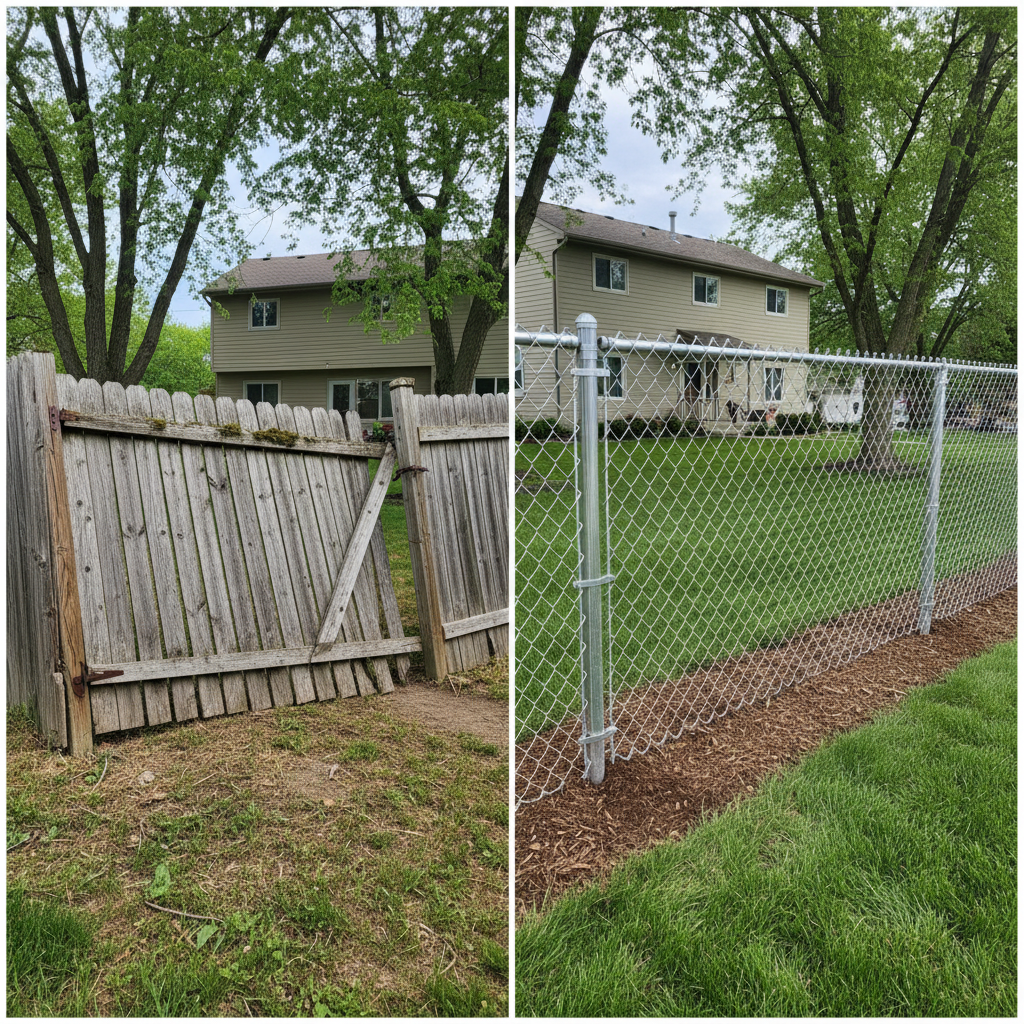
Alright, let's talk chain link fences. They're practical, they're affordable, and for a lot of folks here in Bellevue, they just make sense. Maybe you need to keep the dog in, mark your property line, or just want a simple barrier without spending a fortune. Whatever your reason, one of the first big questions you'll face is how we're going to get those fence posts into the ground.
You've got two main choices: driving them straight in or setting them in concrete. Each has its good points and bad points, especially considering our soil and weather here in eastern Nebraska. I've seen plenty of both over the years, and I can definitely tell you what works and what doesn't.
Driven Posts: Quick and Easy on the Wallet
This is pretty much exactly what it sounds like. We use a specialized post driver and literally pound the steel posts into the ground. No digging, no concrete mix, just good old-fashioned force. Simple.
- Cost: This is where driven posts really shine. Since there's no digging or concrete involved, the labor and material costs are a lot lower. You save on the concrete itself, the time it takes to mix and pour, and then the time it takes for it to dry.
- Installation Speed: It's fast. We can get a whole lot of posts in the ground in a short amount of time. If you're in a hurry to get that fence up, this is probably your best bet.
- Durability & Stability: This is where things get a bit more complicated. In certain soil conditions, like really dense clay, a driven post can be incredibly stable. It's almost like the earth itself is holding it tight. But in softer, looser soils, or areas with a high water table (which we sometimes see near the Platte River), they can be more likely to shift over time. Our freeze-thaw cycles here in Bellevue can also push them up a bit – we call that 'frost heave.' It's not usually a huge deal for a chain link fence, but it's something to know about.
- Appearance: You won't see any concrete collars around the base of the posts, which some people prefer for a cleaner, more minimalist look.
- Maintenance: Generally low. If a post does get a little loose, sometimes we can re-drive it or stabilize it.
Concrete Footings: The Best for Stability
With this method, we dig a proper hole for each post, usually 8-10 inches wide and 24-30 inches deep, and then set the post in concrete. The concrete acts like a solid anchor, locking the post right in place.
- Cost: Higher, no two ways about it. You're paying for the digging, the concrete, and the extra time involved. It's a bigger investment upfront.
- Installation Speed: Slower. Digging takes time, and then the concrete needs to cure before we can really put tension on the fence. You're looking at at least 24-48 hours, sometimes longer depending on conditions, before we can fully stretch the fence.
- Durability & Stability: This is the undisputed champion here. A properly concreted post is incredibly stable and resistant to shifting, leaning, and frost heave. That concrete footing provides a much larger surface area to resist movement, making it ideal for our unpredictable Nebraska weather. If you're putting in a gate post, you absolutely want it in concrete; those things take a lot of stress, don't they?
- Appearance: You'll have a concrete collar around the base of each post. Most people don't mind it, but it is there.
- Maintenance: Once it's in, it's pretty much set. Very little maintenance required for the post's stability.
So, Which One Should You Choose for Your Bellevue Home?
Look, if you're on a really tight budget and need a basic, functional fence for a relatively short run, driven posts can work, especially if your soil is on the firmer side. They're a decent option for temporary enclosures or areas where absolute long-term rigidity isn't the top priority.
However, for most homeowners in Bellevue, especially with our clay and loamy soils that can shift with moisture, and those brutal freeze-thaw cycles we get every winter, I'm going to lean towards concrete footings for your chain link fence posts. It's a better long-term investment. You'll get a more stable, more durable fence that's less likely to sag or shift over the years. You won't have to worry as much about posts getting pushed up or leaning after a few seasons.
Especially for critical points like gate posts or corner posts, concrete isn't just a recommendation, it's a requirement for a fence that's going to hold up. You don't want a gate that sags after a year because the post wasn't properly anchored, right?
At Omega Fencing Solutions, we generally recommend and install concrete footings for most permanent chain link fence projects because we want your fence to last. It might cost a little more upfront, but it pays off in longevity. You'll thank yourself five, ten, fifteen years down the road when your fence is still standing straight and strong.
Give us a call, and we can come out, take a look at your yard, and give you a solid recommendation based on your specific needs and the soil conditions right there on your property. We'll make sure you get a fence that works for you.