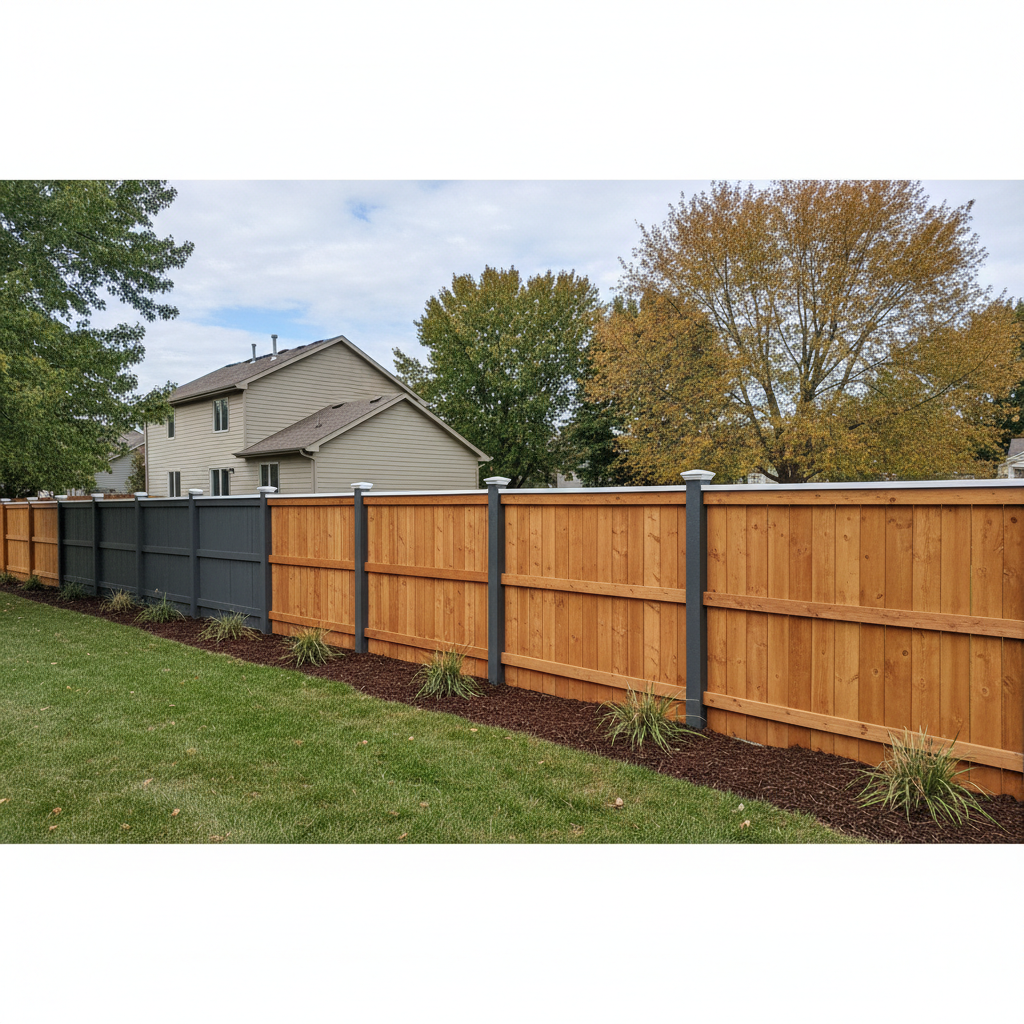
Alright, let's talk about getting your fence stained or painted. It's not just about making it look good; it's about protecting your investment from our crazy Nebraska weather. You want to know what you're in for financially, right? I get it. Nobody likes sticker shock.
What Drives the Price Up (or Down)?
A few things really push the cost one way or another. It's not a one-size-fits-all deal, and anyone who tells you it is probably isn't being straight with you.
- Fence Size and Type: This is a no-brainer. A small picket fence around a garden is way less work than a long privacy fence for a big corner lot in something like the Willowdale neighborhood. Wood type matters too. Rough-sawn cedar might soak up more stain than smooth treated pine, meaning more product and more time.
- Condition of the Existing Fence: Is your fence brand new? Great, that's the easiest. Is it old, weathered, covered in mildew, or peeling paint? That's going to add a significant amount of prep work. We're talking power washing, scraping, sanding, maybe even some minor repairs. Prep is usually 50-70% of the labor.
- Stain vs. Paint: Generally, staining is a bit quicker and often less expensive than painting. Paint usually requires at least two coats for good coverage and durability, sometimes a primer too. Stain can often get away with one good coat, especially if it's a semi-transparent or transparent type.
- Product Quality: You get what you pay for with stains and paints. Cheap stuff might save you a few bucks upfront, but it won't last. Higher-quality products from brands like Sherwin-Williams or Behr will cost more per gallon but offer better UV protection, mildew resistance, and overall longevity. I always recommend going with quality – it saves you money in the long run because you won't be redoing it in two years.
- Accessibility: If your fence is easy to get to, no problem. If it's got dense bushes, tight corners, or uneven ground, it slows things down.
- Number of Sides: Are you just doing the outside facing the street, or both sides? Most folks want both sides done for full protection and a consistent look.
Typical Cost Ranges in Bellevue, NE
Okay, let's get some numbers out there. Keep in mind these are averages, and your specific project could be higher or lower.
- Staining a Fence: For a standard wood privacy fence (6 ft tall), you're generally looking at $2.50 to $5.00 per linear foot for one side, or $4.00 to $8.00 per linear foot for both sides. This usually includes basic cleaning and one coat of good quality semi-transparent or solid stain. So, a 150-foot fence (both sides) could run you anywhere from $600 to $1,200. If it needs heavy prep like power washing off old, grayed wood, add another $0.50-$1.50 per linear foot.
- Painting a Fence: Painting is usually a bit more. For a similar 6 ft privacy fence, expect $3.50 to $7.00 per linear foot for one side, or $5.50 to $10.00 per linear foot for both sides. This includes cleaning, often a primer, and two coats of exterior paint. That same 150-foot fence (both sides) could be $825 to $1,500+. Again, heavy prep for peeling paint will push this higher, potentially another $1.00-$2.50 per linear foot.
These numbers assume a professional crew doing the work efficiently. If you're doing it yourself, you're just paying for materials and your time.
What Should a Quote Include?
When Omega Fencing Solutions gives you a quote, or any other reputable contractor, here's what you should expect to see itemized:
- Linear Footage: The exact measurement of your fence.
- Prep Work: Details on cleaning, scraping, sanding, or any minor repairs.
- Product Type: Specifics on the stain or paint, including brand, type (e.g., semi-transparent oil-based stain, acrylic latex paint), and number of coats.
- Labor Costs: The cost for the crew's time.
- Materials: Cost of the stain/paint, brushes, rollers, tarps, etc.
- Cleanup: What they'll do to leave your yard tidy.
- Warranty: Any guarantee on their work or the product.
How to Avoid Overpaying
This is where you need to be smart.
- Get Multiple Quotes: Don't just go with the first guy. Get at least three detailed bids. This helps you compare apples to apples.
- Ask for References: A good contractor will have happy customers. Call them.
- Check Their Insurance: Make sure they're insured. You don't want to be liable if someone gets hurt on your property.
- Understand the Prep: The biggest variable in cost is often the prep. Make sure you know exactly what's included. If a quote is super low, they might be skimping on prep, and that's a recipe for a job that won't last.
- Don't Be Afraid to Ask Questions: If something in the quote doesn't make sense, ask. A good contractor will explain it clearly.
Doing your homework upfront will save you headaches and money down the road. A well-stained or painted fence not only looks great but also protects your investment for years to come. It's worth doing right.